
Basement flooring in Kokomo IN - a floor that holds up on a tested slab
Damp spots, a musty smell or an old floor lifting at the edges? We test the slab first, then put down a floor that suits it.
- Moisture comes first We test the slab and talk through dampness before suggesting floors.
- Owner on site I look at your floor myself and stay with the crew.
- Honest about water If water is getting in, we say it needs fixing first.
- Prep explained up front Your estimate covers the slab prep, not just the finish.
- Licensed and fully insured.
- Free in-person estimates.
- Replies within 1 business day.
How do you know your basement floor needs attention?
Most basement floor trouble starts with moisture coming up through the slab, and the sooner you catch it, the less you have to tear out before a new floor goes down.
Dark or damp patches on the slab
Spots that stay darker than the rest of the floor usually mean moisture is moving up through the concrete. Any floor laid over that will struggle until it's dealt with.
A musty smell or damp carpet
Mold and mildew grow in carpet that stays damp, and the smell is often the first thing you notice. Waiting usually means pulling up more carpet and pad later.
Old flooring coming loose
Tiles that lift, sheet flooring that bubbles or a coating that peels usually point to moisture underneath. Left alone, the floor keeps breaking down and can start growing microbes.
White powder on the concrete
A chalky white film on bare concrete usually means water is carrying minerals up through the slab. It tells us the slab needs testing before any new floor goes down.
Cracks running across the floor
Cracks can let water through, and they show up through a thin finish if nobody repairs them. I check whether they're still moving before we plan the prep around them.
Old tile you want gone
Older tile, sheet flooring and the glue under them can hold hazardous dust. Please ask before you start pulling them up yourself, because how they come out matters for your health.
How we put down basement flooring
At Kokomo Anchor Epoxy Flooring, a basement floor starts with moisture, not color or style, because how well any floor holds up depends on the water moving up through the slab under it. I test the slab and talk through any dampness you've had before I suggest a floor. If there's a water problem, I'll tell you it has to be dealt with first, since finishing a damp basement can make health problems worse and lead to real damage, and we plan the floor after it. Once the slab is ready, we clear off old coatings, grind the surface so the new floor can grip it, repair cracks and put down the coating or finish you've chosen. The price turns mostly on how much prep the slab needs, whether old flooring has to come up and the size of the room, and the schedule turns on any moisture fix and the product's weather needs, so your estimate lays out the prep as well as the finish.
Most of what makes a basement floor last happens before the finish goes on, which is why our concrete grinding and surface preparation work is part of most basement jobs. If you'd rather keep the look of bare concrete, concrete sealing protects the slab with less work than a full floor.
What happens when you call about a basement floor in Kokomo?
The job runs in four steps, from your first call through testing the slab to walking the finished floor together.
Call or send the form
Tell us about the basement and any dampness you've noticed, and we'll set a time for me to come out and see the floor.
Get your estimate
I check the slab for moisture, old coatings and cracks, then give you an estimate that explains the prep as well as the finish.
Pick a date for the work
We choose a date that suits your schedule and the product's weather needs, then our crew does the prep and the coating.
Walk the finished floor
When the coating is down, we walk the floor with you so you can look it over and ask about anything before we leave.
Why Kokomo homeowners call Kokomo Anchor Epoxy Flooring
I test your slab myself
I come out to look at the floor and test the slab, then stay on site with our crew through the prep and coating.
Building floors in Kokomo since 2017
I started this business in Kokomo in 2017 after learning the trade on a flooring crew from the ground up.
Licensed and fully insured
We're licensed and fully insured, so you aren't the one carrying the risk while our crew works in your basement.
Told plainly when a slab isn't ready
If your slab isn't ready for a floor, I'll say so rather than put down one that won't hold up.
Ask for a basement floor estimate that starts with the slab
Note any past dampness, old flooring to remove and whether the slab has insulation underneath. We reply within one business day to book my visit, and the on-site estimate is free, with no obligation.
Basement floors and finishes
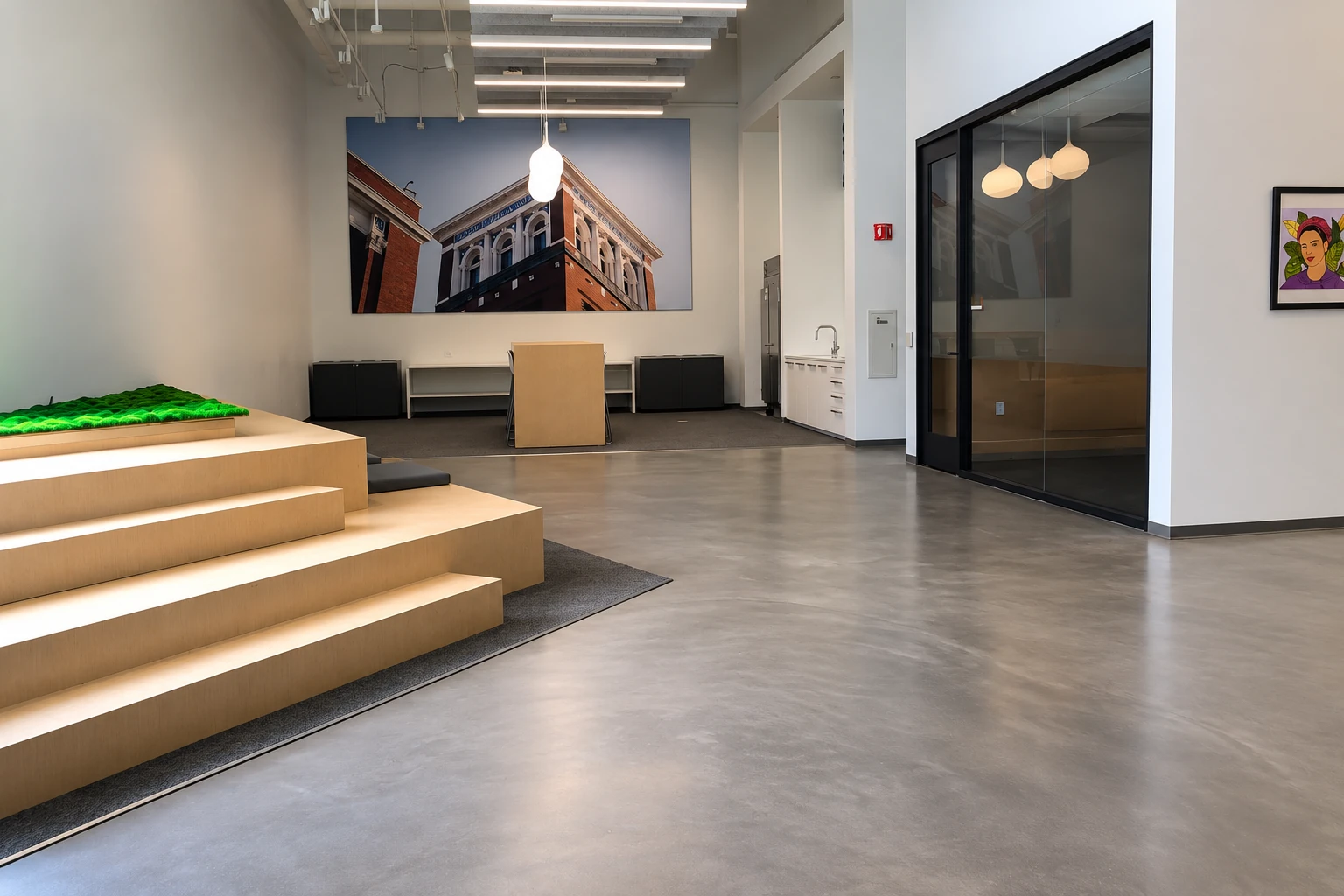
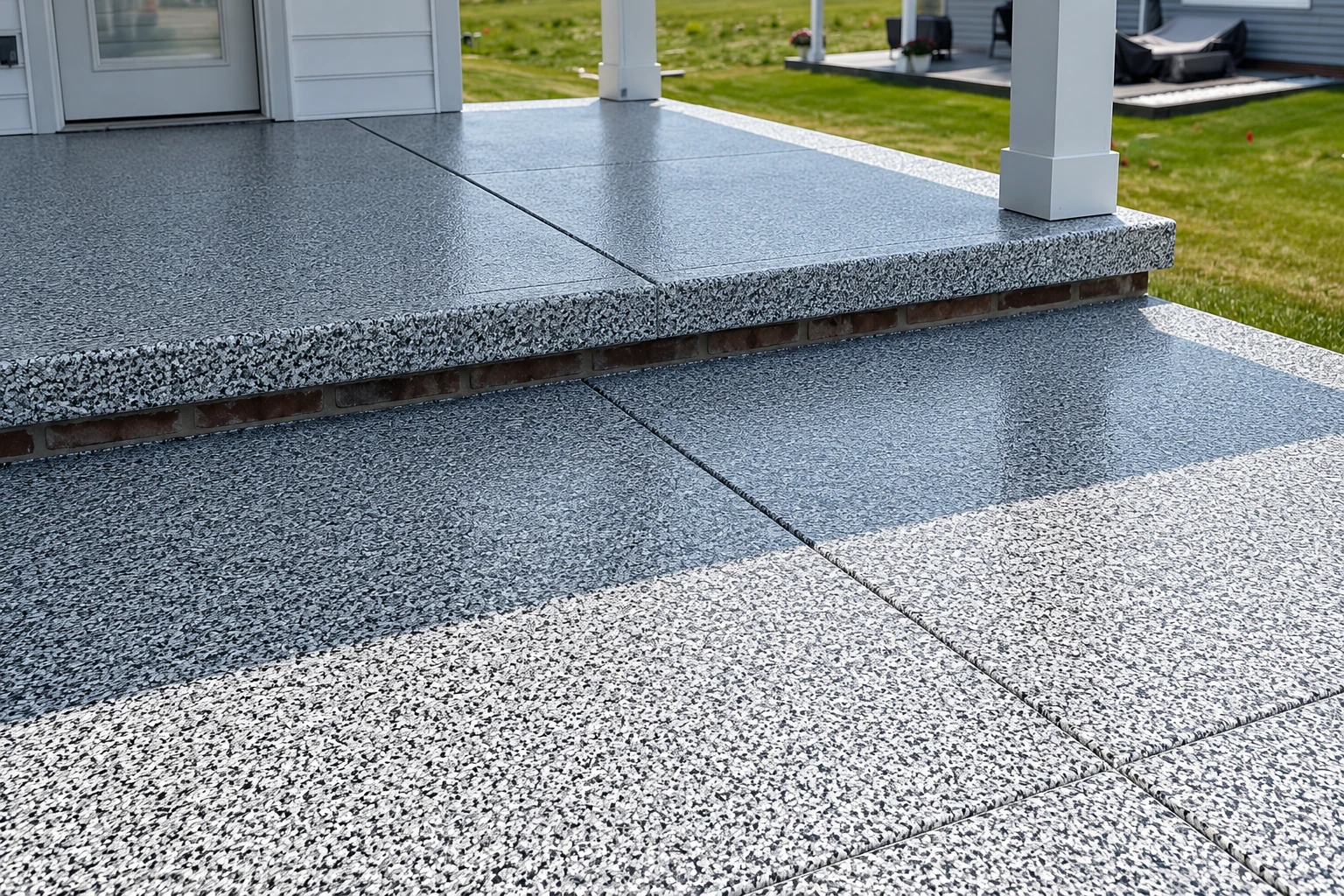
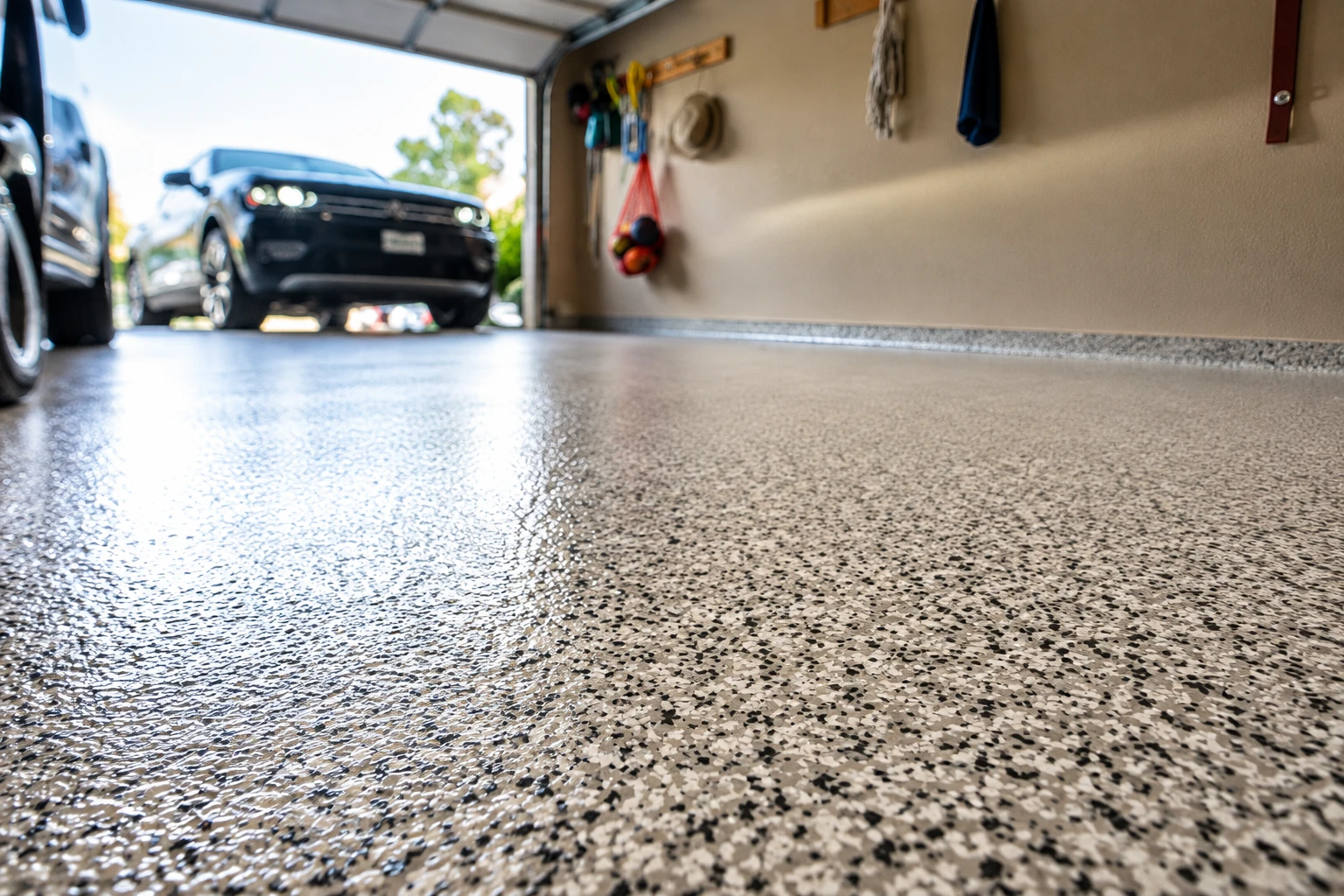
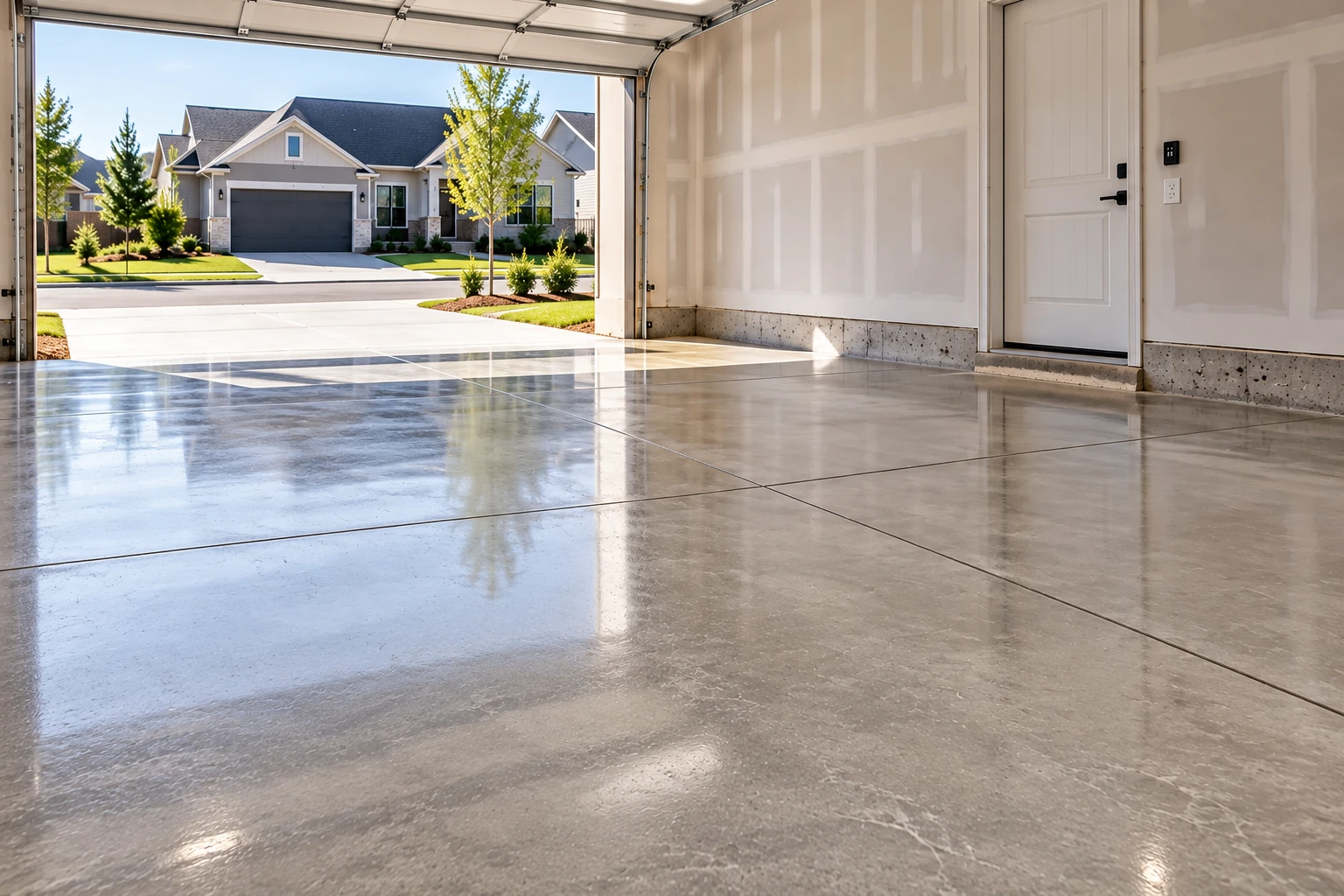
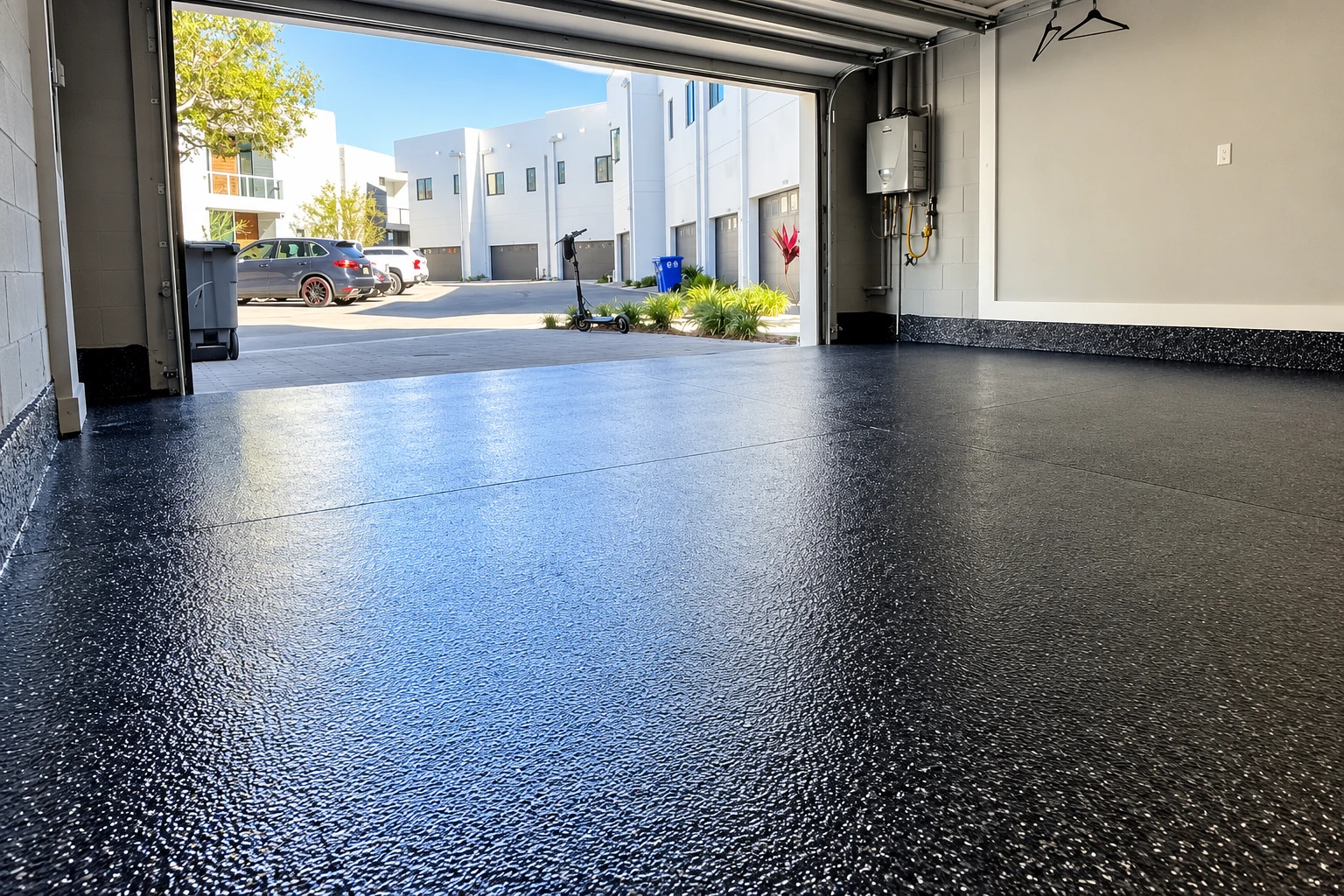
Look through these examples of basement floor coatings and finishes to get a feel for the colors and textures you might want downstairs.
Basement flooring questions we hear
These are the questions Kokomo homeowners ask most before a basement floor goes in. If yours isn't here, call or send the form and ask about your own slab.
Does my basement slab need a moisture test before new flooring?
Yes, flooring makers generally require a moisture test on the concrete before installation, because too much moisture under a new floor can make it come loose, break down or grow microbes. One meter maker explains that the current test method has the slab and the air above it at normal use conditions for at least 48 hours first, so please set the basement up the way you'll use it before I come to test. A test only shows the slab as it was that day, so if yours was tested before, it's worth asking when.
What is the best flooring for a basement, tile or laminate?
Between the two, I lean toward tile for a basement, because it handles water and laminate doesn't. One flooring guide rates tile as highly durable and waterproof, lasting 75 to 100 years, though it can chip, crack and be hard to install, while laminate goes down easily but isn't moisture resistant and lasts 10 to 30 years. If your slab has plastic sheeting over rigid insulation under it, one building science guide says to let it dry before any finish goes down and to skip vinyl and other floors that block moisture, since that slab can only dry upward.
What should I do if my old basement floor might contain asbestos?
Treat it as asbestos unless it's positively known to be asbestos free, which means no sanding, dry scraping or drilling to get it up. Old resilient flooring, its backing and its glue can contain asbestos fibers or crystalline silica, and breathing that dust is a cancer hazard. Tell us about the old floor when you call, and I'll look at it before we plan any removal.
Should I test for radon when I finish my basement in Indiana?
Yes, the Indiana Department of Health recommends testing for radon before and after changes such as finishing a basement. The state estimates that about 1 in 3 Indiana homes have radon levels that pose a serious health risk, so it makes sense to test before the new floor goes down and again once the room is finished.
How much does basement flooring cost in Kokomo?
The cost depends mostly on what the slab needs before the floor goes on, so I can't give you a fair number until I've tested and looked at it. A slab that needs a moisture fix, old flooring removed, cracks repaired or heavy grinding costs more than a dry, bare slab, and a larger room or a thicker coating system adds to it. Your estimate breaks out the prep and the finish so you can see where the money goes.
How do I check whether my Kokomo home is near a flood zone before finishing the basement?
You can look at the area around your home on the Indiana DNR Floodplain Information Portal, a public map of floodplains and flood elevation points along waterways drawn from FEMA and DNR sources. It won't tell you how damp your own slab is, which is what the moisture test is for, but it shows whether water nearby is something to plan around.
Basement floors across the area
We work from Kokomo across these cities and others, checking with the local permit office first and handling the paperwork when a permit is needed. Pick yours below.
Talk to us about your basement floor
We answer the phone seven days a week from 7 AM to 10 PM, and our work is backed by our satisfaction guarantee.